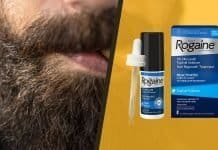

Editor’s note: Updated for 2026 to improve accuracy, clarify realistic expectations, and better separate beard growth basics from overhyped advice.
–
Growing a beard faster usually means improving the conditions for healthy facial hair growth, not changing your genetics overnight.
If your beard feels slow, patchy, or stuck, there are a few things that may help: better sleep, better nutrition, improved skin care, and in some cases targeted options like minoxidil or microneedling. But there are also a lot of beard growth myths out there, so it helps to separate realistic advice from hype.
In this guide, I’ll walk through what can actually support beard growth, what probably will not make much difference, and what kind of results are realistic over time.
other articles in the series include:
- How to grow beard when you can’t grow a beard.
- How to fix and fill patchy beard and bald spots.
- How to make your mustache less patchy and fuller.
- How to get a thicker beard with more volume and density.
- How to fix a beard that doesn’t grow on cheeks.
Quick Answer: Can You Grow a Beard Faster?
You may be able to improve beard growth speed slightly by improving sleep, diet, training, overall health, and beard-area skin care. Some men also experiment with minoxidil or microneedling, though results vary and neither is a guaranteed solution.
What you usually cannot do is completely override genetics. So the goal is not to magically force beard growth overnight, but to create better conditions for stronger, healthier facial hair over time.
How Fast Does a Beard Normally Grow?

For most men, beard hair grows at a fairly modest pace. A common rule of thumb is that facial hair grows roughly half an inch per month, although real-world growth rates vary from person to person.
That variation usually comes down to a mix of:
- genetics
- hormone levels and hormone sensitivity
- age
- sleep and recovery
- diet and nutrient status
- overall health
So if your beard seems slow, that does not automatically mean something is wrong. In many cases, beard growth simply takes longer than people expect, especially during the early growing stages.
Can You Actually Make a Beard Grow Faster?

To some extent, yes, but only within the limits of your genetics and current health.
Most beard growth advice works by improving the environment your facial hair grows in. That can mean better sleep, fewer nutrient gaps, less skin irritation, healthier grooming habits, and in some cases targeted treatments. What it usually does not mean is transforming a naturally sparse beard into a dense beard overnight.
This distinction matters because a lot of frustration comes from chasing unrealistic expectations instead of improving what is actually controllable.
Factors Determining Beard Growth Speed

Before getting into the tips, it helps to understand what actually affects beard growth in the first place.
Some factors, like genetics, are mostly outside your control. Others, like sleep quality, nutrition, exercise, stress, and grooming habits, are areas where you may be able to improve the environment your beard grows in.
That is why beard growth advice works best when it focuses on support rather than miracle claims.
Beard Genetics
This is the boring fact that just is – well – a fact. Your baseline beard growing ability is dictated by your facial hair and hair genetics.
Previously it was believed that these are passed down from the mother’s side, but new research has found that it may not be true, but instead your beard growing genetics can come from either one of your parents.
The most important thing to understand is that you are not limited by your genetics only on facial hair growth. It may be possible to support faster or fuller-looking beard growth in some cases, but genetics still plays a major role in the final result.
The important takeaway is this: genetics set the ceiling, but they do not always determine how close you are getting to your own best possible beard. Lifestyle and grooming changes may still help you improve growth quality, density appearance, and consistency.
Beard Growth Hormones and Receptors
Facial hair is androgenic-hair and the growth of it is regulated and maintained by two primary male hormones; testosterone and DHT.
One study, in particular, noted that testosterone works to prime the follicles for growth and thickness, whereas DHT works directly to enhance linear beard growth and to mature the thin “peach fuzz” type of vellus hairs into thicker terminal hairs.
“But having high hormone levels alone is not the only thing you need for beard growth to occur, as the hormones also need to be absorbed from the bloodstream into the facial hair follicle cells.”
And to do that, you beard follicles have these special cells called androgen receptors (AR). Your androgen receptors in the face need to be sensitive and active enough to bind T and DHT from the blood for beard growth to occur.
Asian men who can’t grow beards are a great example of this. That population has a genetic type where the androgen receptors are less sensitive and don’t bind hormones from the blood as effectively.
As a result, they can often have high testosterone levels – sometimes even higher on average than with Caucasian or African men have – but the unresponsive androgen receptors are holding back their ability to grow facial hair well.
Circulation to the Facial Hair Area
Last but not least, you definitely need to have a good amount of blood-flow going in and out of your facial hair area.
Circulation is the main thing that delivers the nutrients, the hormones, and other growth factors and building blocks directly into the follicles.
Below, in our tips and tricks, we have included multiple effective methods specifically for stimulating the blood flow to the beard area.
9 Tips and Tricks for Faster Beard Growth
No single tip here will guarantee dramatic beard gains on its own. But taken together, these habits and tools may help improve your beard growth conditions and make your facial hair look healthier, fuller, and easier to grow out.
Some of these are basic lifestyle fundamentals. Others are more targeted options that men use when they want to push growth a bit further.
1. Eat Foods that Support Beard Growth

While there are no studies looking directly at what foods could make your facial hair spew out at a faster rate, we still have some evidence to lean on.
And that comes from studies that look at foods and how they impact our beard growth hormones: DHT and testosterone.
“Because those hormones are involved in facial hair growth, supporting healthy hormone levels may help create better conditions for beard growth.”
Foods that influence hormone levels may also influence beard growth conditions, although the effect is unlikely to be dramatic on its own.
I have previously written a huge detailed post about foods for beard growth here, but as a quick primer, below are the five that I think are most impactful.
Alfalfa Sprouts
Last year a group of Japanese researchers divided 68 male subjects into two groups of 34 and put them on an interesting nutrition trial.
The first group was given 50 grams of alfalfa sprouts to consume daily, and the second group got the same amount of broccoli.
After a month, the researchers looked at the men’s hormone profiles and compared them to the levels they had before the trial.
What they found was that the men consuming alfalfa sprouts had increased their DHT levels by 21% and free-testosterone levels by 14%.
Since both DHT and free testosterone are associated with facial hair growth, alfalfa sprouts may be worth considering as part of a beard-friendly diet, though this is not a guaranteed beard-growth shortcut.
Olive Oil
Olive oil is a staple food in the Mediterranean region. The area that is well-known for its thick bearded men.
As it happens to be, a Moroccan study actually looked if extra virgin olive oil (EVOO) could impact the androgenic hormones (again, the same hormones that stimulate beard growth).
In their trial, young men switched their main source of fat to olive oil for two weeks, after which their testosterone levels were compared to the starting levels.
Olive oil increased testosterone levels in that trial, which may be one reason it is often included in diets that support overall health and hormone balance.
Olive oil is not only known for its healthy monounsaturated fats and a high amount of antioxidants; it’s also pretty good for your beard growing hormones.
Sorghum
Not many people are even aware of the ancient grain by the name of sorghum, but everyone interested in facial hair growth should be.
In a study where cells were exposed to an alcohol extract of the grain, the levels of the enzyme 5 alpha-reductase shot up by 54%.
Why is this good news for beardsmen? Well, that same enzyme is responsible for producing DHT, a hormone associated with improved linear beard growth among other things.
There’s some evidence suggesting that sorghum may benefit the beard hormones. You could buy the whole grains and pop them like regular popcorn, or you could get it as sorghum flour and use in your cooking, etc.
Coffee
If you love coffee, then you’re going to like what I’m about to say next…
Coffee may have some indirect relevance to beard growth through its effects on hormones and overall alertness, but it should not be viewed as a direct beard-growth tool.
This has been seen in multiple human studies, as explained by the well-known Examine.Com, and there’s also a rat study which found that coffee was able to boost DHT levels.
On top of this, coffee is actually one of the best sources for daily antioxidants according to Healthline.
So the next time you want to do a favor for your facial hair, get some light roast coffee that is high in caffeine (caffeine seems to be the main reason for the beard hormone boost) and have a cup or two.
Raisins
You might not think that raisins could have anything to do with the health of your facial hair, but they just might help it grow better.
The secret is within a little-known trace mineral hidden inside of them called boron.
There’s a whopping 3mg of boron per 100 grams of raisins, and boron has been found to increase both testosterone levels and DHT levels, which as you should know by now, is really good news for your beard gains.
Raisins may be a useful dietary source of boron, which could indirectly support hormone-related pathways involved in beard growth.
2. Minoxidil Can Speed Up Beard Growth

I have covered minoxidil many times on this site because it is one of the few options with at least some beard-specific research behind it.
That’s right, a group of Thai researches actually tested a 3% minoxidil solution on men’s face and saw that it significantly increased the beard growth rate and the amount of new facial hair grown.
The researchers write:
“The exact mechanism of Minoxidil in promoting hair growth is still unclear but there are many hypotheses. In conclusion, Minoxidil 3% lotion is effective and safe for beard enhancement.”

Sure, there is plenty of research behind this over-the-counter hair-loss drug and how it stimulates the follicles at the top of the head, so it was only a matter of time that people would try and see if it worked like that on the facial hair as well.
A lot of men do report positive results with minoxidil for beard growth, although anecdotal reports and before-after photos should still be viewed with some caution.
Now, can you name any other beard growth product that has anything similar to this?
- Thousands of before-afters that show increased beard growth.
- Dozens of studies showing how it stimulates the hair follicles.
- One study suggesting it can improve facial hair growth as well.
“Minoxidil is one of the very few beard-growth options with both anecdotal support and at least some beard-specific research behind it, even though it is not officially marketed for facial hair.”
Minoxidil is not perfect and it can cause side effects, which I cover in more detail in the full guide, so it is best approached with realistic expectations and some caution.
How to use Minoxidil for Faster Beard Growth
- Get either Kirkland 5% or Rogaine 5%.
- Use 1-2ml in one or two daily applications to your beard area.
- Allow it to absorb to your beard follicles for at least 4-hours.
- Do this for 3-12 months for the best results (it’s not instant).
What is the Best Minoxidil Brand for Facial Hair?
There is the original brand: Rogaine, which does work but is the most expensive choice. Then there are generic brands, which also work just as well and are cheaper.
It doesn’t really matter what brand you get, as long as it has 5% minoxidil as an active ingredient and the same carrier liquids (alcohol and propylene glycol).
I have personally used Rogaine 5%, and in my own experience it worked well.
For someone who lives in the USA, you could save a lot of money and just get Kirkland 5% Minoxidil in a larger batch. It works just as well but is simply much much cheaper.
Bottom line: Minoxidil is an over-the-counter hair-loss drug that many men use off-label for beard growth. It has some beard-specific research and a large amount of anecdotal support behind it, but results vary and it is not free of side effects.
3. Certain Beard Growth Supplements Could Work

Most beard growth supplements are overhyped, and many are just ordinary vitamins with beard-focused branding.
That said, some ingredients may support beard growth indirectly by helping with nutrient intake, training performance, hormone-related pathways, or overall recovery. The key word here is may. Supplements are supportive tools at best, not miracle beard builders.
Multivitamin
You don’t have to be much of an Einstein to figure out that deficiencies in minerals and vitamins can negatively impact your beard’s health and growth rate.
B-vitamins like biotin, for example, are hugely important for the production of keratin, zinc deficiency is commonly associated with weaker hair growth, and multiple vitamins and minerals contribute to the synthesis of your beard growing hormones; testosterone and DHT.
And while you can fix all of your underlying deficiencies by simply eating a wholesome nutritious diet, you could also add in a simple inexpensive multivitamin supplement to cover your bases.
There are “beard growth vitamins” like Vitabeard, Beardilizer, Beard Grow XL, Iron Beard, etc. but they are often expensive and not that impressive in terms of what’s inside of them.
You can get much better bang for your buck by simply purchasing an inexpensive kitchen-sink multivitamin.
Simple multivitamin will be cheaper (when looking at cost-per-capsule) than the special “beard vitamins” while still providing much more micronutrients to you in a higher quality.
Bottom line: A simple multivitamin may help support facial hair growth in men who have underlying nutrient deficiencies, but it is not likely to transform beard growth on its own.
Carnitine
Carnitine is a non-essential amino acid that is well-known as a lipid transporter.
What it does is that it helps the body to shuttle short-chain fatty acids directly into the cells for energy use.
“What does that have to do with beard growth you ask?”
Well, there’s a study by Foizik et al. which showed that through shuttling the fatty acids into the hair follicle cells, carnitine can actually activate dormant follicles by shifting them into the anagen beard growth stage.

There are also two studies by Dr. William J. Kraemer which showed that about 2 grams of carnitine per day, was able to increase the sensitivity of the androgen receptors in men (ref, ref.)
For beard growth, that’s also amazing news, as the androgen receptors within your facial hair follicles will need to bind with androgens (testosterone and DHT) for beard growth to occur.
And if carnitine does increase receptor sensitivity in a meaningful way, it may also help support beard growth.
The studies both used salt-bound carnitine in the form of L-Carnitine L-tartrate. You can buy it as bulk powder and mix with water, for example, there’s barely any taste to it so it’s easy to use.
Mucuna Pruriens
This is something most people wouldn’t even imagine could do anything to your beard growth.
It’s a herb commonly used in India by the name of Mucuna Pruriens (velvet bean) and it contains a very interesting compound called L-Dopa.
“So what can it do for the beard?”
Well for one it does seem to increase the levels of the beard hormone testosterone levels in humans, rats, and even birds (ref, ref, ref.)
The L-Dopa in it is also known as an androgen receptor co-activator protein, and as you know, you need those active androgen receptors to grow a stronger better beard.
You can get Mucuna Pruriens as an extract that has been standardized for L-Dopa, and that would be my recommendation over the pure powder version.
4. Improve Circulation to the Facial Hair Area

Healthy beard growth depends on hair follicles getting a steady supply of oxygen, nutrients, and hormone signals. That is one reason blood flow is often mentioned in beard growth discussions.
Improving circulation is not a magic fix for patchy growth, but habits like regular exercise, gentle massage, and keeping the skin underneath the beard clean and exfoliated may help support a healthier growth environment.
Face Massage
One simple place to start is a gentle daily face massage.
It does not have to be long; even a few minutes per day may be enough to make it a useful part of your routine.
Make sure to focus on the pressure at the cheek area especially, as this will most likely be the area with the weakest flow.
Beard Exfoliation
The easiest way to unclog the pores and remove dead skin cells that may be trapped underneath your beard is as simple as you can imagine…
you just need to exfoliate the skin underneath your beard.
The best way to make sure this happens is to brush your beard daily with a stiff boar bristle beard brush.
Another great method is through using a beard exfoliator scrub once or twice per month. These are not much different from regular face scrubs, they’re just bit more liquid for better access to the under beard skin.
If you would like to exfoliate your beard in the shower, you could even opt for a special in-shower beard scrubber with silicone bristles.
Bottom line: Your beard needs good blood-flow and unobstructed growth pathways to grow faster. Face massage and beard exfoliation can help you accomplish both.
5. Avoid Things That Can Hold Beard Growth Back

Sometimes the best way to improve beard growth is not by adding another product, but by removing habits that may work against healthy facial hair.
Chronic stress, harsh grooming, over-washing, constant beard picking, and poor recovery habits can all make beard growth look worse even if they are not the sole reason your beard grows slowly.
Beard Killer #1: Stress
Stress can be hard to control, and sadly, I’m unqualified to give any tips on mitigating it.
However, the fact still remains that chronic stress brings about chronically elevated cortisol levels, and this stress hormone can suppress your beard growing hormones.
Bottom line: Chronic stress may work against healthy beard growth by disrupting recovery and hormone balance.
Beard Killer #2: Picking the Beard
Got that fancy new beard comb and now you can’t help but pick and comb through your whiskers all day long?
Well, stop that my dear friend!
While there isn’t anything bad about occasionally combing your beard, doing it too often or just simply picking and fiddling around with your beard all-day will lead to beard damage, slow beard growth, and in extreme cases even beard hair loss.
Bottom line: There’s nothing that can be gained from constantly fiddling and picking the beard – and unless you have a hair-pulling disorder like trichotillomania – then it should be really easy to just quit that habit.
Beard Killer #3: Washing the Beard too Often
Over-washing the beard is a beard mistake that far too many beardsmen are guilty of.
You see, as androgenic-hair, the beard is much more reliant on the natural moisture that is provided by the sebaceous glands attached to your facial hair follicles.
And shampoo (especially generic hair shampoo) is designed to strip away oil and sebum.
It’s perfectly fine to shampoo your scalp-hair daily, but the same does not apply to beards.
Most grooming experts recommend that you wash your facial hair only with gentle beard shampoo’s and that you do it just 1-3 times per week at the maximum.
Washing your beard daily is a one-way ticket to the itchy beard, the beardruff city, and beard split-ends.
And since some of the fat-soluble beard hormones are also transported with the sebum, stripping your beard of it daily could also suppress your beard growth speed.
NOTE: If you feel that your beard gets dirty and needs a daily wash, then consider something called the beard-co washing method, which means that you only wash your beard with a beard conditioner and use no shampoo at all.
Beard Killer #4: Heat Damage
If you have ever been growing out a long beard, you know that facial hair – when it gets longer – has a tendency to curl around like crazy.
To help alleviate that, most men blow-dry their beards or turn to beard straighteners for help.
“Both of those methods are fantastic for straightening the beard, but sadly also cause significant heat damage to the whiskers if not done properly.”
We have this handy guide here on how to straighten a beard like a pro that should help you out greatly.
Bottom line: I’m not saying you should never blow-dry or straighten a beard with heat brushes or straightening irons, but if you do it extensively, with too high heat, and for too long, then you will run into some beard heat damage eventually.
Beard Killer #5: DHT-blocking Essential Oils
Surprisingly many beard oils are scented with essential oils that can suppress the master beard-growing hormone; DHT.
And while there are many many oils that actually negatively impact this hormone (even some carrier oils) the ones that you should really care about are the eucalyptus essential oil, the tea tree essential oil, and lavender essential oil.
All of these three oils contain multiple compounds that can interfere – even in minuscule amounts – with DHT and testosterone.
This is very obvious if you read through this press release from Endocrine Society, which quite literally says “Chemicals in lavender and tea tree oil appear to be hormone disruptors“.
Bottom line: There are dozens of great smelling essential oils that won’t suppress your DHT and are perfectly fine for beard growth. I don’t see the reason why companies are still putting these possibly harmful essential oils into their beard oils today.
Beard Killer #6: Relaxing Creams
There’s a new rising trend in the beard care industry and that is the beard relaxing cream.
It’s the most effective method of straightening a beard for sure, as it quite literally breaks the keratin-bonds inside of your facial hair fibers and keeps your beard hairs from sticking out.
But this straightening comes with a price that you will pay through beard damage and a slower rate of facial hair growth.
This is how a well-known expert on the topic of relaxing creams explains the damage they can cause…
“Black women that relax their hair straight from the age of 20 to 40 will lose 50% of their hair strands, the result of long term chemical use is that the follicle will not produce new hair, causing premature baldness, and having to turn to the use of wigs, weaves and braiding.” – Dr. W. Morrow
Bottom line: If your beard comes in curly, then let it come in curly or use a blow-dryer/heat brush to tame the whiskers. Going all extreme with a keratin-bond breaking relaxing cream is not recommended, it’ll literally kill the beard from inside out.
6. Peppermint Oil May Help, but Evidence Is Limited

Peppermint oil gets mentioned in beard growth conversations because there is some early research suggesting it may stimulate hair growth under certain conditions.
The important catch is that the most commonly cited evidence is not beard-specific human research. So while some men like using diluted peppermint oil as part of a beard routine, it is better to think of it as a possible supportive option, not a proven beard growth solution.
If you use peppermint oil for beard growth, always dilute it properly in a carrier oil and patch test first. Essential oils can easily irritate the skin when used too aggressively.
Now about the research I mentioned above. The scientists tested four different topical ointments on mice hair follicles to see how those affected hair growth and the follicles.
These included:
- Saline solution (control).
- Jojoba oil (Simmondsia Chinensis).
- 3% Solution of liquid minoxidil.
- And 3% dilution of peppermint oil (Mentha x Piperita).
What happened was that the salt-water solution did pretty much nothing to stimulate hair growth, and jojoba oil had a very marginal positive effect…
And minoxidil, as you might expect, worked quite well, significantly improving the growth rate and thickness of hairs.
“But then there was a big surprise; the peppermint essential oil, which was even more effective at stimulating the hair follicles than minoxidil.”
Here’s a graph of the results:

The researches measured various things in this study, and they saw that the peppermint oil works primarily through increasing the levels of IGF-1 growth hormone within the follicles.
This results in more active follicles, increased hair thickness (diameter), more hairs transitioning into the anagen growth phase, and overall, faster beard growth.
Of course, the big limitation of this study is that these were indeed mice, not humans.
But could the results translate to increased beard growth potential in a human male?
We think they could. After all, mice are studied because they share very similar reproductive and digestive systems as humans do, and there have been previous human studies where increased IGF-1 has been shown to stimulate the follicles and help shift more hairs into the anagen growth phase.
So if applying a 3% dilution of PEO to your skin results in increased facial hair follicle IGF-1 levels, then it’s also likely that it would help speed up beard growth.
How do you make a 3% solution from pure peppermint oil?
Well, you dilute it into a carrier oil (never rub pure essential oils into the skin, they’re extremely potent and will burn like hell).
Here’s a simple guide to making 3% PEO solution:
- Get one 1 oz dropper bottle.
- Fill the bottle almost to brim with jojoba oil.
- Buy some 100% pure peppermint essential oil.
- Drip approximately 18 drops of PEO into the dropper bottle.
- Close the cap, shake well, and you have your 3% PEO.
You can use this solution on your beard area twice per day, and you could also combine it with minoxidil, and use it as a beard moisturizer after you have had the Minox on your beard area for ~4 hours.
Important: More is not better with essential oils. Keep the dilution conservative, avoid broken or freshly microneedled skin, and stop using it if you notice burning, redness, or persistent irritation.
7. Microneedling May Be Worth Testing

Microneedling is often used in beard routines because it may help support skin turnover and may complement other growth-focused habits.
The evidence most people cite comes from hair-related research rather than beard-specific studies, so expectations should stay realistic. Still, some men feel it helps as part of a broader routine.
If you use a beard roller, keep it clean, avoid overdoing frequency, and do not combine it carelessly with irritating products on the same day.
How the Derma Roller works on beard is very simple:
- You roll through your beard area with the Derma Roller
- The tiny needles puncture small holes into the skin surface
- The body notices this and it starts the repair process.
- Nutrients, blood, and hormones are shuttled to the scene.
- Indirectly, this supplies building blocks for your beard hairs.
There is currently one study about this but it was done on scalp-hair.
Regardless, it showed that when used in combination with Minoxidil, men were able to get much better results if they Derma Rolled and used Minox instead of just using the hair-loss drug alone.
Here’s a graph that shows this:

Will similar results be obtainable for beard growth enhancement?
It’s possible, but the evidence is currently limited to scalp hair only.
There are also many positive anecdotal reports from thousands of guys who microneedle their beards at the Minox Beard Spot group on FaceBook.
I go through all the details of using derma roller for beard growth in our previous article, but if you just want the quick facts: just get a 0.5-0.75mm roller and use it once per week on the beard area.
8. Make Sure Your Beard Care Routine Is Not Working Against You

A good beard care routine will not create new beard follicles, but it can improve comfort, reduce breakage, minimize irritation, and make your beard look better while you grow it.
That means using gentle cleansing, not over-washing, avoiding irritating ingredients where possible, and choosing products that support the skin underneath the beard instead of drying it out.
The first thing to check would be your beard oils, beard balm, and beard waxes to see if they have any beard growth suppressing ingredients like tea tree oil, eucalyptus, or lavender oils.
Next up you should make sure that you’re not brushing or combing your beard too often to avoid stress on the follicles. Brushing once per day is enough, and combing 2-4 times is plenty enough.
Then let’s move into cleaning the beard. Make sure you actually use a dedicated beard wash instead of harsh generic shampoos and don’t wash the beard too often, just a couple times per week is enough.
Lastly, make sure to also care for the beard from the inside, as in drink enough of water, eat enough of food (beard growth is an energy-expensive process), and make sure to get all the necessary vitamins and minerals your body needs to spew out facial hair.
9. Overall Take Better Care of Your Body

There are many lifestyle-related basic things that you could optimize for speedier facial hair growth.
These are the basic things that everyone subconsciously knows can help, but really aren’t doing them, and even though they may seem kinda boring, they can still boost beard growth quite significantly over a longer stretch of time.
Let’s take a look at the top three:
Sleep More
It’s hard nowadays to get to bed on time. There’s Netflix, HBO, YouTube, and million other things you could be doing instead, and it’s starting to feel like a chore to get to sleep early.
However, sleep is something we should not be delayed, as it has been shown that when men cut their sleep time by just an hour or two, their testosterone levels are immediately lowered for the next day.

Since it’s a hormone of beard growth, lack of sleep will eventually catch up and slow down your beard growth rate for sure.
Exercise and Lift Weights
Any type of daily activity is known for increasing the hormones that fuel facial hair growth, and it can also improve your circulation especially to the beard area.
But the best type of exercise for facial hair growth purposes would be heavy weight-lifting and explosive resistance training because it activates the androgen receptors.
Bottom line: Sensitive and activate androgen receptors are good news for beard growth, and since resistance training can help with this, I suggest you start doing it.
Stay Lean
Having a somewhat low body fat percentage can help you increase facial hair growth, simply because fat mass is known for breaking DHT down into a less potent by-product called 3a-diol (source).
So technically your belly is breaking down the hormone that builds your beard at a faster rate.
Does that mean heavier men cannot grow beards? No. It just means body composition may be one factor that influences hormone balance and beard growth potential.
Can You Grow Beard Faster as a Teenager?

Maybe, but patience matters more than hacks here.
If you are still in your teens, your beard may simply not be fully developed yet. Facial hair often continues to mature well beyond the early teenage years, which means slow growth is not necessarily a problem that needs fixing.
The most sensible approach is to focus on the basics:
- sleep enough
- eat well
- train regularly
- manage stress
- avoid harsh grooming habits
- give your beard time to develop
For teenagers especially, I would be cautious with aggressive “growth boosting” approaches. In many cases, the biggest factor is just age and normal hormonal development.
Can Beard Growth Products Speed Up Beard Growth?

Usually not in any major way.
A lot of beard growth products are marketed as if they can create rapid new growth, but many are just standard grooming products or generic supplements packaged around a beard promise.
That does not mean every product is useless. Some may help with beard softness, skin condition, irritation, or breakage. But those benefits are different from actually making your beard grow much faster.
In other words, a product can improve the condition of your beard without being a true growth accelerator.
Can Beard Oil Boost Beard Growth Rate?

Not directly.
Beard oil is mainly a grooming product. Its job is to soften facial hair, reduce dryness, improve beard feel, and help moisturize the skin underneath.
That can make your beard look healthier and reduce the kind of dryness or breakage that makes growth more frustrating. But beard oil itself is not a reliable way to speed up beard growth.
So beard oil is worth using for maintenance and appearance, just not as a miracle growth solution.
Beard Growth Infographic

What Usually Helps vs What Is Mostly Hype
The most dependable beard-growth advice tends to be boring: sleep better, eat better, recover better, train consistently, and avoid damaging grooming habits.
The hype usually comes from miracle oils, flashy supplements, and exaggerated promises that ignore genetics. If a beard product sounds like a shortcut that works for everyone, it is probably being oversold.
Conclusion
You may be able to improve beard growth by getting the fundamentals right: sleep, diet, exercise, recovery, stress control, and better beard-area care.
Beyond that, some men also experiment with options like minoxidil, microneedling, or diluted peppermint oil, but these should be approached with realistic expectations. None of them can guarantee dramatic results, and genetics still plays a major role.
So the best mindset is simple: focus on what you can improve, stay consistent, and judge progress over months rather than days.